Summary

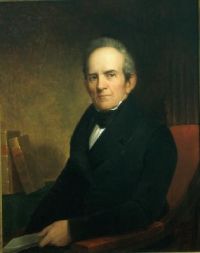
Portrait of Smith Thompson Smith Thompson Thompson v. Tolmie — Opinion of the Court

When there is a fair sale, say the court, and the decree executed by a conveyance from the administrator, the purchaser will not be bound to look beyond the decree, if the facts necessary to give the court jurisdiction appear on the face of the proceedings. After a lapse of years, presumptions must be made in favour of what does not appear. If the purchaser was responsible for the mistakes of the court, in point of fact, after they had adjudicated upon the facts, and acted upon them, these sales would be snares for honest men.
Source: Wikisource

Portrait of Smith Thompson Smith Thompson Thompson v. Tolmie — Opinion of the Court

If it could be divided without injury, the commissioners were required to divide it, although all the heirs were minors. The materiality of the inquiry, whether any one of the heirs was of age, was altogether contingent, and might never arise. And at all events, must depend upon the report of the commissioners, whether or not the property might be divided without injury. This must, necessarily, therefore be an inquiry arising in the course of the proceedings, and after the jurisdiction of the court attached.
Source: Wikisource

Portrait of Smith Thompson Smith Thompson Thompson v. Tolmie — Opinion of the Court

That it was so intended is obvious from what immediately follows. 'We know nothing in the organization of the circuit courts of the union, which can contradistinguish them from other courts in this respect.' And the limitation upon the extent of the inquiry, when the proceedings are brought collaterally before the court, is explicitly laid down. 'We agree, that if the county court had jurisdiction, its decisions would be conclusive. When a court has jurisdiction, it has a right to decide every question that occurs in the cause
Source: Wikisource

Get perspective with Kwize: daily news enlightened by great literature