Summary

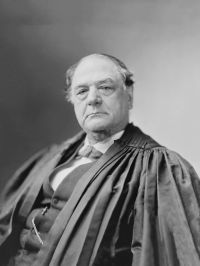
Portrait of Noah Haynes Swayne Noah Haynes Swayne Bates v. Brown — Opinion of the Court

The feudal policy of tying up estates in the hands of a landed aristocracy, which had much to do with the shifting of descents as recognized by the English canons of descent, is contrary to the spirit of our laws and the genius of our institutions. It has been the policy, in this State, and in this country generally, not only to let estates descend to heirs equally, without reference to sex or primogeniture, but also to make titles secure and safe to those who may purchase from heirs upon whom the descent may be cast.
Source: Wikisource

Portrait of Noah Haynes Swayne Noah Haynes Swayne Bates v. Brown — Opinion of the Court

The statute bears no marks of haste or inattention. We cannot believe it was intended to leave a rule of the common law so well known, and so important, to be deduced and established only by the doubtful results of discussion and inference. The draughtsman of the bill could not have overlooked it, and the silence of the statute is full of meaning.
One class of posthumous children are provided for. We see no reason to believe that another was intended to be included, especially when the principle involved is so important. The intention of the legislature constitutes the law.
Source: Wikisource

Portrait of Noah Haynes Swayne Noah Haynes Swayne Bates v. Brown — Opinion of the Court

The celebrated statute of 12 Charles II, ch. 24, which Blackstone pronounces a greater acquisition to private property than magna charta, was followed by no change in the canons of descent. The dominant principles in the British constitution have always been monarchical and aristocratic. These canons tend to prevent the diffusion of landed property, and to promote its accumulation in the hands of the few. They thus conserve the splendor of the nobility and the influence of the leading families, and rank and wealth are the bul warks of the throne.
Source: Wikisource

Get perspective with Kwize: daily news enlightened by great literature