Summary

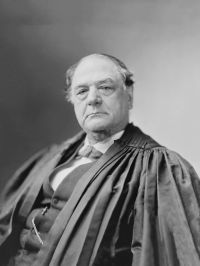
Portrait of Noah Haynes Swayne Noah Haynes Swayne Daniel v. Whartenby — Opinion of the Court

The devise is to them, their heirs and assigns forever.
Why should a different effect be given to the same language when applied to different persons in the same class? If the widow and two sisters could take under that employed as to them only as estate for life, why shouly Richard take more? And if James Whartenby and the three last-named devisees could take a fee simple, which, laying out of view the deed to Hazel, no one questions, why not the issue of Richard, if such issue had been born and survived him?
Source: Wikisource

Portrait of Noah Haynes Swayne Noah Haynes Swayne Daniel v. Whartenby — Opinion of the Court

It cannot reasonably be supposed that the testator intended to give Richard a fee, which even with his consent might be 'so sold,' and if he had children, thus cut them off and transfer the estate out of the family; and if he left no issue, defeat the rest of the scheme of the will. These results could be guarded against only by giving a life estate to Richard, and nothing more.
In this class of cases in the English courts the doctrine of Shelley's case is applied unless there are circumstances which clearly take the devise out of that rule. Every doubt is resolved in favor of its application.
Source: Wikisource

Get perspective with Kwize: daily news enlightened by great literature