Summary

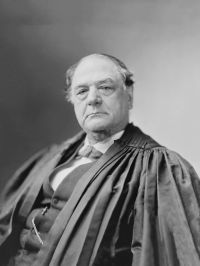
Portrait of Noah Haynes Swayne Noah Haynes Swayne Doe Lessee of Poor v. Considine…

Issue is the only term which will represent the will of the testator in every situation. Thus, in the trust to support and educate the children of John M. Barr charged on Maria Barr's life estate, grandchildren were doubtless also intended, and issue in its strict sense would embrace them.
Now, when is the failure of issue contemplated by the testator when he says, 'Should my said son John M. Barr die without leaving any issue of his body, then and in that case I do give and devise the remainder of my estate in the said farm to my said sons-in-law, &c., and their heirs forever'-to take place?
Source: Wikisource

Portrait of Noah Haynes Swayne Noah Haynes Swayne Doe Lessee of Poor v. Considine…

It would be a monstrous perversion to accept and sustain a rule, no matter by whom devised, or by whom or how many adopted, the obvious effect of which would be to defeat the intention of the devisor. The rule, as it is called, that holds a remainder vested even by forcing the language, has its origin in a purpose to save, not to defeat, the intent of the grantor or devisor by saving the remainder from many of the accidents which destroy it if contingent. [3] Yet, even in these cases, the early vesting of a remainder is not an end, but a means
Source: Wikisource

Portrait of Noah Haynes Swayne Noah Haynes Swayne Doe Lessee of Poor v. Considine…

Adverbs of time-as where, there, after, from, &c.-in a devise of a remainder, are construed to relate merely to the time of the enjoyment of the estate, and not the time of the vesting in interest. [16]
Where there is a devise to a class of persons to take effect in enjoyment at a future period, the estate vests in the persons as they come in esse, subject to open and let in others as they are born afterward. [17]
An estate once vested will not be devested unless the intent to devest clearly appears.
Source: Wikisource

Get perspective with Kwize: daily news enlightened by great literature