Summary

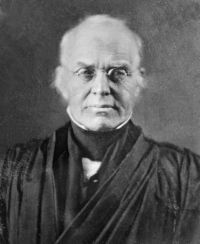
Portrait of Joseph Story Joseph Story King v. Mitchell — Opinion of the Court

But a man-to whose issue, in events within the immediate contemplation of the testator, a splendid fortune was to pass, and in whom, in the mean time, the estate was to vest for the benefit of those who must necessarily be most near, as well as most dear to him, the objects of all his affections and all his anxieties-could hardly be deemed without some adequate equivalent for his labours in a trust which was to centre in him for the benefit of his offspring.
Source: Wikisource

Portrait of Joseph Story Joseph Story King v. Mitchell — Opinion of the Court

There can be no doubt, that if testator had left one child, that child would have been the sole heir: if he had left ten children, they would have taken in equal proportion. Such are the provisions of the will. There is nothing to indicate any intention, that if the first clause in his will had taken effect, the whole estate was to pass into a single hand, or to remain undivided. Had William King married a daughter of William Trigg, &c., he as clearly would have taken the estate under the second clause, for the condition would then have been performed.
Source: Wikisource

Portrait of Joseph Story Joseph Story King v. Mitchell — Opinion of the Court

Looking at the form of the devise, taking the principles of law as settled in the case, can it be said that there is an outstanding cestui que trust, who is to have the whole of the beneficial interest in the estate of the testator, and that William King is but a bare trustee? There is no occasion to create a trust for such a purpose. The appellees might hold the property as an executory devise, or a springing use. The court of law having given judgment in favour of the devises against the heirs at law, is equivalent to saying, no use resulted to him.
Source: Wikisource

Get perspective with Kwize: daily news enlightened by great literature