Summary

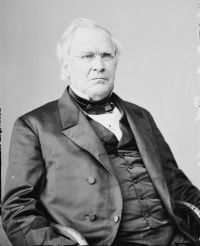
Portrait of Robert Cooper Grier Robert Cooper Grier Abbott v. Essex Company Tenants…

The defendants, on the contrary, maintain that, independent of the last clause, by which the estate is given over, the sons took a fee-simple. And, secondly, that the clear intention of the testator is, that both real and personal estate should pass on a definite contingency, namely, the decease of one brother without issue in the lifetime of the other.
There is, perhaps, no point of testamentary construction which has undergone such frequent discussion, and is so fruitful in cases not easily reconciled, as that now brought under our consideration.
Source: Wikisource

Portrait of Robert Cooper Grier Robert Cooper Grier Abbott v. Essex Company Tenants…

Chapman, 1 P. Wms. 663, that the very same words in a will should receive one construction when applied to one portion of the devise, and another construction as applied to another, is not reconcilable with reason.' Without making an array of cases, we may state that many of the English, and nearly all the American cases, seem to concur in the truth and force of this observation; and consider a 'share' of an estate, consisting of both realty and personalty, given over on a contingency to the 'survivor,' as clear evidence that the testator did not intend an indefinite failure of issue.
Source: Wikisource

Portrait of Robert Cooper Grier Robert Cooper Grier Abbott v. Essex Company Tenants…

But, in a country where, from necessity or choice, every man acts as his own scrivener, his will is subject to be perverted by the application of rules of construction of which he was wholly ignorant.
The rule laid down in Purefoy v. Rogers, 2 Saund. 388, 'that where a contingency is limited to depend on an estate of freehold which is capable of supporting a remainder, it shall never be construed to be an executory devise,' has been received and adopted in Massachusetts.
Source: Wikisource

Get perspective with Kwize: daily news enlightened by great literature