Summary

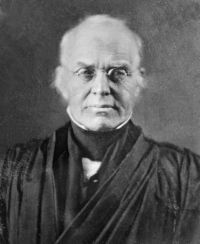
Portrait of Joseph Story Joseph Story Gardner v. Collins — Opinion of the Court

Now what reason is there to suppose that the legislature, in this clause, meant in favour 'of the blood of the person, from whom such estate came or descended,' to extend its reach beyond that of the common law? No such intention is disclosed on the face of the provision; and every progressive enactment, for the last fifty years in Rhode Island, is a relaxation of the strict canons of descent of the common law.
Source: Wikisource

Portrait of Joseph Story Joseph Story Gardner v. Collins — Opinion of the Court

In the case of gift and devise, the last ancestor is agreed to be the stock. If he is not also in the other case of descent, what is there in common between them? Why use them in connection, when they express two separate principles, establish two distinct rules, and transfer the estate to two different sets of heirs. In those three cases, the same person shall be the stock of descent. This is common to them all, connects them in principle, and therefore they are connected in language. We never speak of a multitude, unless to say something applicable to a multitude.
Source: Wikisource

Portrait of Joseph Story Joseph Story Gardner v. Collins — Opinion of the Court

It is true, that in a sense an estate may be said to come by descent, from a remote ancestor to a person, upon whom it has devolved through many intermediate descents. But this, if not loose language, is not that sense which is ordinarily annexed to the term. When an estate is said to have descended from A. to B., the natural and obvious meaning of the words is, that it is an immediate descent from A. to B. If other words of a statute should seem to require another and more enlarged meaning, there would be no absolute impropriety in adopting it
Source: Wikisource

Get perspective with Kwize: daily news enlightened by great literature