James Edwin Thorold Rogers

James Edwin Thorold Rogers

Summary

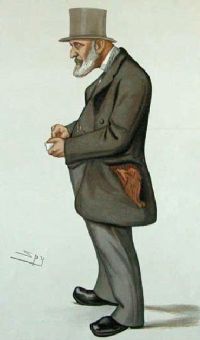
Portrait of James Edwin Thorold Rogers James Edwin Thorold Rogers The Story of Nations - Holland… (1886)

In our days, it would be unwise and unjust to confer a monopoly of trade upon any joint-stock company, and to bestow on the members of such a company the power of punishing those who intruded on the privilege so conferred. But it was a very different matter in those times. In the first place, they had to contend against the absolute power of the Spanish government. In the next, the Dutch and the English were a hundred years later in the field than their rivals.
Source: Wikisource

Portrait of James Edwin Thorold Rogers James Edwin Thorold Rogers The Story of Nations - Holland… (1886)

But during the whole time that the first war lasted, the Dutch were extending and strengthening this armed trade of theirs in the East, at the expense of Spaniard and Portuguese, defeating their navies, storming their forts, and proving to the Oriental rulers, who had hitherto no knowledge of any Powers but that of Spain and Portugal, that there was one other race at least, which was more than a match for these Europeans, with whom alone the native rulers had been hitherto familiar.
Source: Wikisource

Portrait of James Edwin Thorold Rogers James Edwin Thorold Rogers The Story of Nations - Holland… (1886)

In 1605, the Dutch East India Company sent out its third fleet to the East. The second of these fleets had established forts and factories in Malabar, and had established friendly relations with the princes of Sumatra. The third captured Amboyna from the Spaniards, and secured the whole town and island for the Company. The next object of the Dutch was to get possession of the five islands on which alone at that time the clove grew. For the monopoly of this spice Spaniards, Dutchmen, and Englishmen long contended, and warred sedulously.
Source: Wikisource

Get perspective with Kwize: daily news enlightened by great literature