Summary

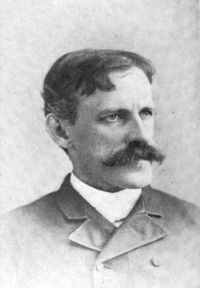
Portrait of William Elliot Griffis William Elliot Griffis The Story of New Netherland — Chapter XIX: Sundays in Colonial Days (1909)

If these colonial assistants read with the same fine effect and reverend devotion as I have often heard the Scriptures rendered by the precentors in Holland, it seems no wonder that Scripture-reading then, as now, was often declared and felt to be quite as important as the minister’s discourse, for correct reading is, ipso facto, both illumination and commentary.
Source: Wikisource

Portrait of William Elliot Griffis William Elliot Griffis The Story of New Netherland — Chapter XIX: Sundays in Colonial Days (1909)

Then people went in the church to see the baby held in the Domine’s arms. Whoever else might come, the minister and elder must be present.
On the sacramental table the communion service of colonial days, sometimes of pewter, but oftener of silver, is in many Reformed churches still in use. In larger edifices, long tables were laid down the aisles. The baptismal bowl used to be placed in a socket or bracket extending from the pulpit. The pulpits, usually brought from Holland, were octagonal in shape, each suggesting a wineglass in form, and just large enough to hold one man.
Source: Wikisource

Portrait of William Elliot Griffis William Elliot Griffis The Story of New Netherland — Chapter XIX: Sundays in Colonial Days (1909)

In Dutch neither man nor woman in married to any one. Bride or groom marries with him or her. In New Netherland boys and girls were both educated, and men and women were more on an equality than after the time of English fashions. Until quite recent times all marriage fees were paid by the Domine into the church treasury, and were not private perquisites, as at present, or gifts to the lady of the parsonage.
Source: Wikisource

Get perspective with Kwize: daily news enlightened by great literature