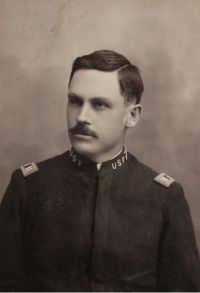
James H. McClintock

James H. McClintock

Summary

Portrait of James H. McClintock James H. McClintock Mormon Settlement in Arizona

It would be vain recapitulation to tell just how many times each of the poor struggling communities had to rally back on the sands of the river bed to built up anew the structure of gravel and brush that must be depended upon, if bread were to be secured from the land. The Little Colorado is a treacherous stream at best, with a broad channel that wanders at will through the alluvial country that melts like sugar or salt at the touch of water.
Source: Gutenberg

Portrait of James H. McClintock James H. McClintock Mormon Settlement in Arizona

Hamblin was absolutely sure of the identity of the American Indians with the Lamanites of the Book of Mormon. He regarded the Indians at all times as brethren who had strayed from the righteous path and who might be brought back by the exercise of piety and patience. Very much like a Spanish friar of old, he cheerfully dedicated himself to this particular purpose, willing to accept even martyrdom if such an end were to serve the great purpose.
Source: Gutenberg

Portrait of James H. McClintock James H. McClintock Mormon Settlement in Arizona

So, in September, 1870, there was a gathering at Mount Trumbull, with about fifteen Indians. What followed is presented in Powell's own language:
"This evening, the Shivwits, for whom we have sent, come in, and after supper we hold a long council. A blazing fire is built, and around this we sit—the Indians living here, the Shivwits, Jacob Hamblin and myself. This man, Hamblin, speaks their language well and has a great influence over all the Indians in the region round about. He is a silent, reserved man, and when he speaks it is in a slow, quiet way that inspires great awe.
Source: Gutenberg

Get perspective with Kwize: daily news enlightened by great literature