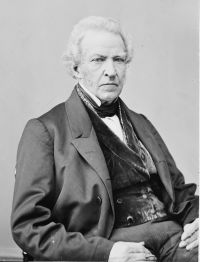
Summary

Portrait of James Moore Wayne James Moore Wayne Hill v. Tucker — Opinion of the Court

Each is privy to the testator, and would be estopped by a judgment against him, but they have no privity with each other in law or estate. They receive their authority from different sovereignties, and over different property. The authority of each is paramount to the other. Each is administrator to the ordinary from which he receives his commission.
Source: Wikisource

Portrait of James Moore Wayne James Moore Wayne Hill v. Tucker — Opinion of the Court

The executor's interest in the testator's estate is derived from the will, and vests from the latter's death, whatever may be the form which the law requires to be observed before an executor enters upon the discharge of his functions. When within the same political jurisdiction, however many executors the testator may appoint, all of them may be sued as one executor for the debts of the testator, and they may unite in a suit to recover debts due to their testator, or to recover property out of possession.
Source: Wikisource

Portrait of James Moore Wayne James Moore Wayne Hill v. Tucker — Opinion of the Court

That if plaintiff were not entitled to recover against defendant on the production of the records showing the judgments against the co-executors in Virginia, and that those judgments were unsatisfied, because of a lack of assets in the hands of the Virginia executors to satisfy the same, that they would be entitled to recover, on producing the further evidence to prove that those judgments in Virginia were rendered on good and valid, and subsisting and unsatisfied, causes of action against the testator, Robinson.
Source: Wikisource

Get perspective with Kwize: daily news enlightened by great literature