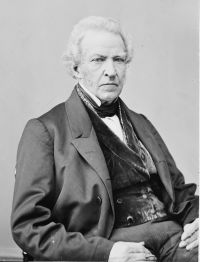
 James Moore Wayne,
Lewis v. Darling — Opinion of the Court
James Moore Wayne,
Lewis v. Darling — Opinion of the Court
“ Such is the settled law both in England and in the United States, though cases do not often occur for its application. Where one does occur, a legatee may sue to recover the legacy, without distinguishing in his bill the estate into the two kinds of realty and personalty, because it is the manifest intention of the testator that both should be charged with the payment of the money legacies. Nor does this conflict at all with that principle of equity jurisprudence, declaring that generally, the personal estate of the testator is the first fund for the payment of debts and legacies. ”
