Summary

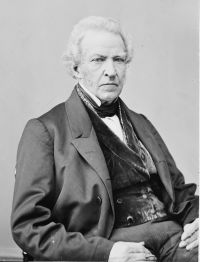
Portrait of James Moore Wayne James Moore Wayne Washington Bridge Company v. Stewart…

To permit afterwards, upon an appeal from proceedings upon its mandate, a suggestion of the want of jurisdiction in this court, upon the first appeal, as a sufficient cause for re-examining the judgment then given, would certainly be a novelty in the practice of a court of equity. The want of jurisdiction is a matter of abatement, and that is not capable of being shown for error to endorse a decree upon a bill of review.
Source: Wikisource

Portrait of James Moore Wayne James Moore Wayne Washington Bridge Company v. Stewart…

When the Supreme Court have executed their power in a cause before them, and their final decree or judgment requires some farther act to be done, it cannot issue an execution, but shall send a special mandate to the court below to award it. Whatever was before the court, and is disposed of, is considered as finally settled. The inferior court is bound by the decree, as the law of the case, and must carry it into execution according to the mandate.
Source: Wikisource

Portrait of James Moore Wayne James Moore Wayne Washington Bridge Company v. Stewart…

Shall the appellant be allowed to do more now, than would be permitted on a bill of review, if this court had the power to grant him such a remedy? If he was, we should then have a mode for the review of the decrees of this court, which have become matters of record, which could not be allowed as an assignment of error for a bill of review, in any of those courts of the United States in which that proceeding is the ordinary and appropriate remedy.
The application has been treated in this way, to show how much at variance it is with the established practice of courts of equity.
Source: Wikisource

Get perspective with Kwize: daily news enlightened by great literature