“ Between the lofty chapel and the subterranean crypt of the church of Saintes-Maries-de-la-Mer, on the level of human life, does the miracle come always from below? And if it be so, is it any less a miracle? Which of you has fathomed the meaning of life? Who can say: “It is unjust,” or: “It is useless,” or: “What I do not see does not exist”? Who can say if Livette’s sufferings and Renaud’s, their troubles and their heart-burnings, all the invisible and inexplicable movements within themselves,—of which they knew nothing,—were not preparing the way for realities inconceivable to our minds? ”
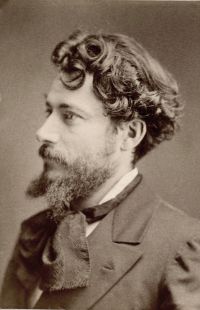
Jean Aicard
Summary
“King of Camargue”, is a work by Jean Aicard. It explores elements such as Livette, Renaud and drover.
Quotes from King of Camargue (Jean Aicard)
“ But when she felt the cool air blowing upon her bare breast, she had said to herself in her mysterious language, full of cabalistic words and images, that if a saint had been able to recompense a boatman—her good friend—simply by revealing to him her beauty all unclothed, a heathen might, by similar means, chastise a brutal drover; for love is the magician’s herb, the bitter-sweet, the plant with two savors, balm and poison at once; and woman is bitter as the salt sea water, frightful as death,—her hands are chains stronger than iron, and her whole being is as much to be dreaded as an army! ”
“ On the shelf, above all these priestly vestments—which were arranged with the backs outward, hung in such fashion that you seemed to be looking at the priests standing at the altar—on the shelf, between the goblet and the pyx, shone the consecrated host, a radiant sun, mounted upon a pedestal like a candelabrum; and in the centre of its rays was a gleaming circle of plain glass, which also reflected, in fantastic guise, the flame of the lamp.“Kneel, Renaud!” said Livette. “Prayer is the cure for what is happening to us. Kneel and let us pray!” ”
