
“ A drover, caught between two horns—luckily well separated—and tossed into the air, has but one thought when he picks himself up after falling to the ground—a thought so surprising as not to be ridiculous: to rearrange his breeches and readjust his belt. ”
Drover
Definition and stakes
A drover is traditionally someone who herds livestock, often across great distances, embodying themes of perseverance and direction. Authors like Jean Aicard humorously portray the physical challenges of droving, as seen in his account of a drover’s battle with a stubborn animal. Others, such as Jerome K.
Jerome, draw a metaphorical comparison between the drover’s journey and the thrill of sailing, capturing the feeling of movement and the bond with nature. These diverse depictions, ranging from the visceral to the lyrical, highlight the theme’s emphasis on manual labor and the human connection to motion and the natural world.
Quotes about “drover”
Alice Crary Sutcliffe, Robert Fulton
“ Sail like a common boat, Obtain air and light, Plunge and Rise perpendicular, Turn to the right and left at pleasure, Steer by the compass under water, Renew the common volume of air with ease And add the respirable air, by a reservoir, which may be obtained at all times. ”
 Edwin Arlington Robinson,
Captain Craig; A Book of Poems
(1915)
Edwin Arlington Robinson,
Captain Craig; A Book of Poems
(1915)
“ But I heard no more than a knocking splash And a wind that shook the dark. "It is only the wind that blows," I said, "And the boat that rocks outside." And I watched her there, and I pitied her there— "Be quick! be quick!" she cried. ”
 William Hope Hodgson,
The Boats of the "Glen Carrig"
William Hope Hodgson,
The Boats of the "Glen Carrig"
“ And, apart from the way in which the boat met the seas, there was a very sense of terror in the air; the continuous roaring and howling of the storm; the screaming of the foam, as the frothy summits of the briny mountains hurled past us, and the wind that tore the breath out of our weak human throats, are things scarce to be conceived. ”
 William James Roe,
Letters from the Old World — Number I. On Board the Steamer Asia
(January 1862)
William James Roe,
Letters from the Old World — Number I. On Board the Steamer Asia
(January 1862)
“ Another hours, and our ship before a fair wind, and under a cloudy sky, was on her way over the broad ocean. The pilot leaves us, the captain takes command, the shores recede from view, sky and ocean alone surround us; and I, in common with most of my fellow passengers, ... our berths under very peculiar circumstances. The winds and waves have raised within us a commotion similar to the rolling without: that is to say, we are getting sea sick. ”
James Grant, Dick Rodney; or, The Adventures of an Eton Boy
“ Resting upon our oars, or only using them to keep the boat's head to the break of the sea, and to prevent her being swamped—an operation during which they were as often flourished in the air as in the ocean, when we rose on the crest of one vast heaving wave, or sank into the dark vale of water between two—resting thus, we gazed in silence and with aching hearts at the destruction of our home upon the sea. ”
 Lydia Huntley Sigourney,
Pocahontas and Other Poems
(1841)
Lydia Huntley Sigourney,
Pocahontas and Other Poems
(1841)
“ When but one bold adventurous rush remain’d 'tween death and life. The boat! the boat! it launches forth upon the mountain wave, And leaping throngs, with frantic haste, essay its power to save: A fragile thing, it tossing strove amid the wrathful tide, And deep, unutter'd pangs were theirs who left that vessel's side. ”
 William Clark Russell,
My Danish Sweetheart: A Novel. Volume 1 of 3
William Clark Russell,
My Danish Sweetheart: A Novel. Volume 1 of 3
“ I had undergone some lifeboat experiences in my time, but never before was nature so exhausted in me. The roaring of the gale, the cannonading of the deck-house by incessant heavy showerings of water, the extravagant motions of the plunging and rolling vessel, might have been a mother's lullaby sung by the side of a gently-rocked cradle, so deep was the slumber these sounds of thunder left unvexed. ”
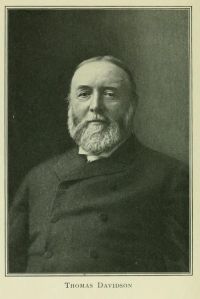 Thomas Davidson,
Chambers's Twentieth Century Dictionary 1908…
(1908)
Thomas Davidson,
Chambers's Twentieth Century Dictionary 1908…
(1908)
“ Sail close to the wind, to keep the boat's head near enough to wind as to fill but not shake the sails: to be almost indecent; Second wind, new powers of respiration succeeding to the first breathlessness; Sow the wind and reap the whirlwind, to act wrongly and receive a crushing retribution. ”
 Jerome K. Jerome,
Three Men in a Boat (To Say Nothing of the Dog…
Jerome K. Jerome,
Three Men in a Boat (To Say Nothing of the Dog…
“ We kept very quiet about it, and got the sail up quickly before they found it out, and then we spread ourselves about the boat in thoughtful attitudes, and the sail bellied out, and strained, and grumbled at the mast, and the boat flew.I steered.There is no more thrilling sensation I know of than sailing. It comes as near to flying as man has got to yet—except in dreams. The wings of the rushing wind seem to be bearing you onward, you know not where. You are no longer the slow, plodding, puny thing of clay, creeping tortuously upon the ground; you are a part of Nature! ”
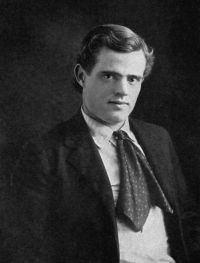 Jack London,
The Sea-Wolf
(1904)
Jack London,
The Sea-Wolf
(1904)
“ I came on deck, after a good night's rest in spite of my poor knee, to find the Ghost foaming along, wing-and-wing, and every sail drawing except the jibs, with a fresh breeze astern. Oh, the wonder of the great trade-wind! All day we sailed, and all night, and the next day, and the next, day after day, the wind always astern and blowing steadily and strong. ”
Nora Archibald Smith, Children of the lighthouse (1924)
“ We all get in boat, push off, and begin to row hard as we can, but the farther we get from land the blacker get the dark and the big wave come splash, crash, lift us ’way up, sink us ’way down, keep us tossing like ball in air. ”
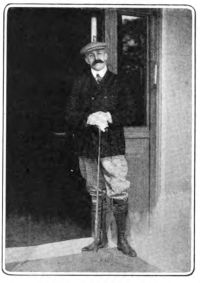 Max Pemberton,
The Sea Wolves — XXVII. IN THE VALLEY OF SILENCE
(1901)
Max Pemberton,
The Sea Wolves — XXVII. IN THE VALLEY OF SILENCE
(1901)
“ He could tell little beyond the terror of the transit when, in the darkness, he felt the boat spinning round and round like a top; or striking the rock with fearful concussion; or flying downward like a ship upon the fall of a sea. ”
William Clark Russell,
My Danish Sweetheart: A Novel. Volume 3 of 3
“ Then, again, I found a sort of support in the experiences I had passed through on the raft and in the lugger. The mind is always sensible of a shock on leaving the secure high deck of a ship, and looking abroad upon the vast, pitiless breast of old Ocean from the low elevation of a boat's side. I have heard of this sort of transition paralyzing the stoutest-hearted of a shipwrecked crew; for in no other situation does death seem to come nearer to one, floating close alongside, as it were, and chilling the hottest air of the tropics to the taste and quality of a frosty blast ”
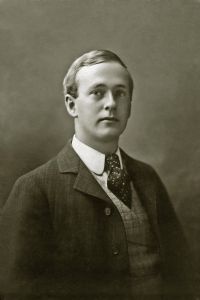 Henry Milner Rideout,
Beached Keels
(1906)
Henry Milner Rideout,
Beached Keels
(1906)
“ The boat turned, and pulled slowly away through the mist that from all the open water rose like smoke, and drew slowly down with the tide. And through the smoke the heart in the boat and the heart on the shore were aching for each other across the growing distance. ”
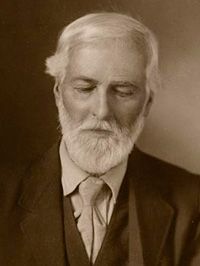 Jesse A. Applegate,
Recollections of My Boyhood
(1914)
Jesse A. Applegate,
Recollections of My Boyhood
(1914)
“ But I soon recvoered from this childish fear, and as I learned that the motion of the boat became more lively and gyratory, rocking from side to side, leaping from wave to wave, or sliding down into a trough and then mounting with perfect ease to the crest of a wave, dashing the spray into our faces when we were in rough water, the sound of rapids and the sight of foam and white caps ahead occasioned only pleasant anticipation. Often when the current was strong, the men would rest on their oars and allow the boats to be swept along by the current. ”
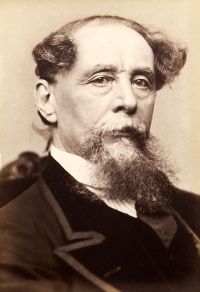 Charles Dickens,
The Works of Charles Dickens
(1898)
Charles Dickens,
The Works of Charles Dickens
(1898)
“ The Tug-steamer lying a little off the shore, the Lighter lying still nearer to the shore, the boat alongside the Lighter, the regularly-turning windlass aboard the Lighter, the methodical figures at work, all slowly and regularly heaving up and down with the breathing of the sea, all seemed as much a part of the nature of the place as the tide itself. ”
Lowell Thomas, Count Luckner, the sea devil (1927)
“ Our boat lay in a calm. Not a breath of air around us. Will this wandering giant strike us and break upon us, deluge and swamp us? Automatically Leudemann at the rudder tries to steer us. Without wind our boat cannot move, much less steer. ”
David W. Bone, The Brassbounder: A Tale of the Sea
“ For a space of time we were condemned to a seaman's purgatory; we had entered the 'doldrums,' that strip of baffling weather that lies between the trade winds. We would have some days of calm and heavy rains, sudden squalls and shifting winds, and a fierce overhead sun; and through it all there would be hard labour for our crew (weak and short-handed as we were) , incessant hauling of the heavy yards, and trimming of sail. Night or day, every faint breath of wind a-stirring, every shadow on the water, must find our sail in trim for but a flutter of the canvas that would move us on ”
Sven Anders Hedin, From Pole to Pole: A Book for Young People
“ The boats' prows are tilted high up into the air and the water streams off them. They shoot forward like mad things through the foaming sea, whether it be day or night, and pitch up and down over the crests of the waves. ”
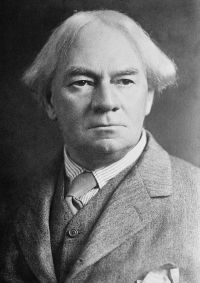 Jerome Klapka Jerome,
Three Men in a Boat
(1889)
Jerome Klapka Jerome,
Three Men in a Boat
(1889)
“ Then, after tea, the wind veers round, and you have to pull hard in its teeth all the way home. When you forget to take the sail at all, then the wind is consistently in your favour both ways. But there! this world is only a probation, and man was born to trouble as the sparks fly upward. ”
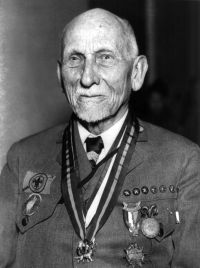 Daniel Carter Beard,
Boat-Building and Boating
Daniel Carter Beard,
Boat-Building and Boating
“ It is apparent to the most unthinking observer that no vessel propelled by sail can move against the direct course of the wind—that is, nothing but electricity, naphtha, steam, or some such power can drive a boat into the eye of the wind. ”
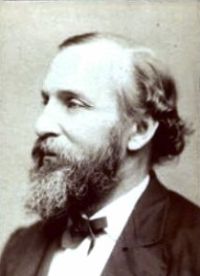 Oliver Optic,
Ready About; or, Sailing the Boat
Oliver Optic,
Ready About; or, Sailing the Boat
“ The wind carries the paper in the direction towards which it is blowing. If the breeze struck square against the sail, it would blow the boat over to-day. We trim the sail at an angle, at a slant, with the way the wind blows. ”
“ In rough water, if a sea strike a boat under the counter a variety of disagreeable results may ensue; for instance, the boat’s bows may be driven under, or she may broach to, that is, be driven broadside on to the sea, and be swamped by the next wave. ”
J. W. Gibson, Recollections of a Pioneer
“ While in the mountains we frequently came to shoals and riffles over which the boat dashed at a speed that turned us dizzy, but we had to stay with it and trust to the man at the rudder to keep her straight ahead. ”
Herbert Hall Turner, A Voyage in Space (1915)
“ On a ship when there is a head wind, the bows will sometimes hit a wave with a resounding smack, and a shower of spray is tossed into the air; the wind catches the spray, carries it down the boat, and dashes it in your face perhaps though you may be far away from the bows. ”
 William Henry Giles Kingston,
Hurricane Hurry
William Henry Giles Kingston,
Hurricane Hurry
“ An oar served us as a rudder, another as a mast, with a piece of sacking as a sail spread on a condemned boat-hook, while one of us was constantly employed in baling out the water which came in through leaks unnumbered—a state of affairs we had learned to consider normal to our craft. ”
The Romance of Gilbert Holmes: An Historical Novel
“ Awaiting a more favorable moment, I sprang into the boat, and doing so, pushed it into the boiling water. Little, however, could I do now that I was afloat and held the oars, for, enveloped in darkness, the waves flying before the storm so tossed me about that effort to make headway was lost in striving to keep afloat. Then the wind, veering with the windings of the river or overhanging trees, bewildering me, I was fain to sit still and wait some clew to guide me. ”
 Cyrus Townsend Brady,
Woven with the Ship: A Novel of 1865
Cyrus Townsend Brady,
Woven with the Ship: A Novel of 1865
“ How the wind will rack the old timbers! I lie awake o' nights and hear it howling around the corners of the house and wait for the sound of the crashing of the old ship. I've heard the singing of the breeze through the top-hamper many a time, and have gone to sleep under it when a boy; but the wind here, blowing through the trees and about the ship, gets into my very vitals. Some of it will go to-night, and I shall be nearer the snug harbor aloft in the morning. ”
 John Thomson,
Illustrations of China and Its People
(1874)
John Thomson,
Illustrations of China and Its People
(1874)
“ As we advanced we were favoured with a slight wind, the sails were then spread, and the men squatted about the deck to enjoy their pipes, and the cheering prospect of a fair breeze, and no work to be done. ”
John Gilmore, Storm Warriors; or, Life-Boat Work on the Goodwin Sands
“ The breeze freshens, and there is a great bubble of leaping surf in the broken water in the angle of the pier; an ordinary boat would speedily be swamped there; but there the life-boat rides on the tumbling seas like a thing of life; every experiment increases the confidence that her crew and the lookers-on feel in the boat. ”
John Gilmore, Storm Warriors; or, Life-Boat Work on the Goodwin Sands
“ Each time that the boat lifts on the top of a wave they can make out the signal-fire on board the wreck, as the boat falls in the trough of a sea they speed swirling along, through a very gauntlet of hungry waves which leap upon her, as wolves would leap upon a strong horse ”
Charles Bullard Fairbanks, My Unknown Chum: "Aguecheek"
“ The thumping of the sea against our wooden walls, the swash of water on deck as the ship rolls and pitches as you would think it impossible for any thing addicted to the cold water movement to roll or pitch, and over all the wild, changeless, shrieking of the gale, will not suffer sleep to visit those who are not inured to such things. ”
William Henry Giles Kingston,
Old Jack
“ It feeds while on the wing, and is very voracious, pouncing down on any object which its piercing eye can discover in the water; and many a poor fellow, when swimming for his life, having fallen overboard, has been struck by one, and sunk to rise no more. ”
Various, The Atlantic Monthly, Volume 08…
“ After dining, and allowing the boat to drift while rearranging my provisions, I took my place, and, getting the proper bearings astern, bent on the oars.To those who have rowed only clumsy country-boats, with their awkward row-locks and wretched oars, slimy, dirty, and leaking, trailing behind tags and streamers of pond-weed, or who have only experimented with that most uncivilized style of digging up the water called paddling, the real pleasure of rowing is unknown. ”
 F. Tennyson Jesse,
Beggars on Horseback
F. Tennyson Jesse,
Beggars on Horseback
“ For a steamer goes independently of the wind, ignores it, shoves her nose in its face, and the wind pays her back by becoming an enemy, but a sailing-ship lives by wind, humours it, coaxes the last hair's-breadth of it, and the wind, flattered, ignores that all the time it is being managed and made of use. ”
 Edmond Warre,
1911 Encyclopædia Britannica, Volume 4…
(1911)
Edmond Warre,
1911 Encyclopædia Britannica, Volume 4…
(1911)
“ Man soon found out that he wanted to go faster than the raft would move, that the water washed over and up through it, and this need of speed, and of dry carrying power, which we find operative throughout the history of the boat down to the present day, drove him to devise other modes of flotation as well as to try to improve his first invention. ”
T. D. Hallam, The Spider Web: The Romance of a Flying-Boat War Flight
“ In shallow water the troughs of the waves are retarded, with the result that they become steep, the crests break, and the water rushes forward with great violence.Water in mass played upon by the wind is not the tractable element it appears when running through our pipes, contained in shaving-mugs, or filling baths. Thus, while a land-machine pilot, down safely with engine failure, has all his worries behind him, the pilot of a seaplane or flying-boat, down at sea, has all his troubles to come, unless the weather be fine, help near at hand, or his craft very seaworthy. ”
“ Leeway and lateral resistance—Heeling—Balancing sails—Tacking—Action of rudder—Longitudinal resistance—Deep keel or centre-board. Any object floating on the water will have a tendency to drift before the wind; but a boat, with its scientifically constructed hull, sails, and rudder, can be so guided as to sail with the wind on her quarter or abeam, or even close-hauled, as it is called, that is, with the wind meeting her at an angle of about forty-five degrees. ”
William Clark Russell,
The Honour of the Flag
“ Ever gazing madly round the horizon, the sole occupant of a frizzling boat, in search of a ship where I might obtain water to cool my blue and frothing lips? Well, my duff is not a very considerable one, and the few plums in it I fear are almost wide enough apart to be out of hail of one another. ”
William Henry Giles Kingston,
Old Jack
“ Suddenly, as if by magic, from all quarters came hurrying up dark lowering clouds, covering the whole concave of heaven, a lurid light only gleaming out from near the horizon. Then, amidst the most terrific roars of thunder, the brightest flashes of lightning, and the rushing, rattling, crashing sound of the tempest, there burst upon us a wind, which made the ship reel like a drunken man, and sent the white foam, torn off the surface of the harbour, flying over the deck in sheets, which drenched us through and through. ”
 Talbot Baines Reed,
Parkhurst Boys, and Other Stories of School Life
Talbot Baines Reed,
Parkhurst Boys, and Other Stories of School Life
“ Have you known your boat to fly through the waves without making way, and noted anxiously by some landmark that she is rather drifting back with the current, instead of, as it seems, tearing before the wind? ”
Paul König, The Voyage of the "Deutschland"
“ The daylight fades; the well-known singing and seething of the submersion valves sounds in our ears. The gauge in the conning-tower registers 11 fathoms, 13 fathoms; the power is lessened; 161⁄2 fathoms appears, and I await the gentle impact with which the boat shall touch on the ground.... ”
 John Aikin,
Evenings at Home; Or, The Juvenile Budget Opened
John Aikin,
Evenings at Home; Or, The Juvenile Budget Opened
“ A boat oversets with you both in a deep stream. You plump at once to the bottom, and infallibly lose your life. He rises like a cork, darts away with the greatest ease, and reaches the side in perfect safety. ”
William Spiers Bruce, Polar Exploration (1911)
“ Sometimes she rose high above us, almost exposing her keel to view, and again descended as we in our turn rose to the top of the wave, threatening to bury her beneath us, whilst the crashing of the breaking upper works and boats increased the horror of the scene. ”
