Summary

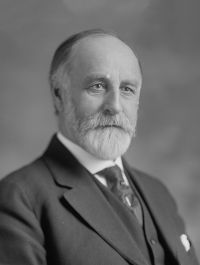
Portrait of Jesse Walter Fewkes Jesse Walter Fewkes Antiquities of the Mesa Verde National Park (1909)

The women of Spruce-tree House were expert potters and decorated their wares in a simple but artistic manner. Until we have more material it would be gratuitous to assume that the ceramic art objects of all the Mesa Verde ruins are identical in texture, colors, and symbolism, and the only way to determine how great are the variations, if any, would be to make an accurate comparative study of pottery from different localities.
Source: Gutenberg

Portrait of Jesse Walter Fewkes Jesse Walter Fewkes Antiquities of the Mesa Verde National Park (1909)

IX. A great part of the house, or rather village, is in an excellent state of preservation, both the walls, which at some places are several stories high and rise to the roof of rock, and the floors between the different stories still remaining. The architecture is the same as that described in the ruins on Wetherill’s Mesa. In some parts more care is perhaps displayed in the shape of the blocks and in the joints between them. The walls, here as in other cliff-dwellings, are about 0.3 m. thick, seldom more.
Source: Gutenberg

Portrait of Jesse Walter Fewkes Jesse Walter Fewkes Antiquities of the Mesa Verde National Park (1909)

Although the decoration on pottery from Spruce-tree House embraces some symbols in common with that of the ruins along the Little Colorado, including prehistoric Zuñi, there is evidence of a mingling of the two ceramic types which is believed to have originated in the Gila basin. The resemblance in the pottery of these regions is greater near the sources of the Little Colorado, differences increasing as one descends the river.
Source: Gutenberg

Get perspective with Kwize: daily news enlightened by great literature