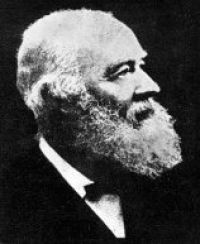
John Ball

John Ball

Summary

Portrait of John Ball John Ball,  Baharia Oasis (1903)

“ The finding of these forms, so distinctively Eocene, is important as showing that whatever the age of the limestones at the actual edge of the south part of the oasis may be, the beds forming the plateau only a few kilometres east of the oasis are, like those which form the top of the northern scarp, of undoubted Eocene age. ”
Source: Gutenberg

Portrait of John Ball John Ball,  Baharia Oasis (1903)

“ The primary excavation of the hollow was followed by the formation of a great lake, in which were laid down deposits of sandstone, quartzite, and iron-ore; this lake doubtless surrounded islands, represented to-day by those hills which still preserve their limestone-caps; it extended, or similar lakes existed, beyond the oasis-limits, forming the quartzites and ferruginous sandstones passed on the way from Maghagha to Baharia, and was perhaps continuous with the Oligocene and post-Oligocene sea which covered a large part of the country to the north. ”
Source: Gutenberg

Portrait of John Ball John Ball,  Baharia Oasis (1903)

“ The Eocene is seen to form the surrounding plateau only on the north; while the Cretaceous, consisting of several well-marked divisions, occupies not only the depression itself, but forms part of the surrounding plateaux on the east and west sides, and is continuous with that of Farafra to the south. Moreover, the relations of the two great formations of Cretaceous and Eocene are now shown to be those of unconformability and overlap. The actual extent of volcanic rocks and post-Eocene lacustrine deposits, the latter a newly-discovered and important series, is now shown for the first time. ”
Source: Gutenberg

Get perspective with Kwize: daily news enlightened by great literature