Summary

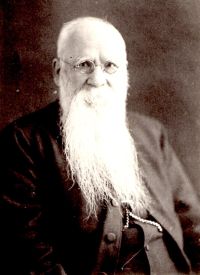
Portrait of John Batchelor John Batchelor An Ainu–English–Japanese Dictionary (1905)

But does the close resemblance between some of the words found in ancient Japanese and Ainu vocabulary tend to unify or in any way prove the two races to have been originally one? The reply is “yes” and “no.” In the sense now generally meant by races being one, the verdict must, I think, be “no,” certainly. If, however, we go back far enough,—if, for example, we travel back to the time of the confusion of tongues,—to the time when people were fewer and the continents as now found not existing—we may reply, “yes.”
Source: Wikisource

Portrait of John Batchelor John Batchelor An Ainu–English–Japanese Dictionary (1905)

Suffice it here to say, that each tense of the indicative mood of Japanese verbs and adjectives is inflected so as to point out the nature of its grammatical agreement with the other words of the sentence, and that one of the results of the system is the formation of immensely long, sentences, all the clauses of which are mutually interdependent, in such wise that the bearing of any one verb or adjective as to tense and mood is not clinched until the final verb has come to round off the entire period.
Source: Wikisource

Portrait of John Batchelor John Batchelor An Ainu–English–Japanese Dictionary (1905)

If instead of saying michi ku goro, “I possess a father,” one says, en otta michi an, “to me there is a father,” the word “father” is no longer a possessed object, but a subject who indicates his possessor. Compare the Russian, French, and Latin constructions: У нею́ оте́цъ есть; tibi est pater, mihi est uxor; and ce livre est a moi, and so on.
There are certain prepositional particles such as e, o, ko, (each in its turn always retaining its own special definite root-meaning—for in the Ainu language there are no expletives) which in a way, may be regarded as indicating case.
Source: Wikisource

Get perspective with Kwize: daily news enlightened by great literature