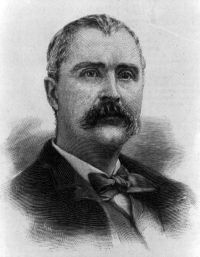
John Boyle O'Reilly

John Boyle O'Reilly

Summary

Portrait of John Boyle O'Reilly John Boyle O'Reilly Moondyne — The Child's Grave (1879)

She tottered beneath the rough and needless force, and would have fallen down the open hatchway, had she not caught at a swinging rope, and saved herself. As she recovered, she gave a kind of pitiful short cry or moan, and looked round bewildered, the tears springing to her eyes. The rough and busy warder again approached her, and she shrank aside in terror.
At this moment she felt a soft hand take her own, and hold it tightly. The touch restored her confidence. She turned and met the sweet face and kindly smile of Sister Cecilia. The warder at the same moment respectfully saluted the nun.
Source: Wikisource

Portrait of John Boyle O'Reilly John Boyle O'Reilly Moondyne — The Child's Grave (1879)

Alice could not speak; but she controlled herself, and kept from sobbing. She looked around wonderingly.
"This is my room, Alice," said Sister Cecilia; "my room and yours. This narrow passage is for us alone. It leads straight to the female compartment and the hospital; and no one can come here but you and I—not a soul, for the next four months. Just think of that, child! Look out of that pretty little window, and say 'good-bye' to gloomy old England and her prisons. We'll be all alone till we arrive in Australia— except when we are attending the sick."
Source: Wikisource

Portrait of John Boyle O'Reilly John Boyle O'Reilly Moondyne — The Child's Grave (1879)

Seen from below, on the convicts' deck, every hatchway stood in the centre of the ship like a great iron cage, with a door by which the warders entered, and a ladder to reach the upper deck.
The convicts below never tired of looking upwards through the bars, though they could see nothing above but the swaying ropes and sails, and at night the beautiful sky and the stars.
In the forward and smallest compartment of the ship between decks lived the crew, who went up and down by their own hatchway. In the next, and largest compartment, lived the male convicts, three hundred in number.
Source: Wikisource

Get perspective with Kwize: daily news enlightened by great literature