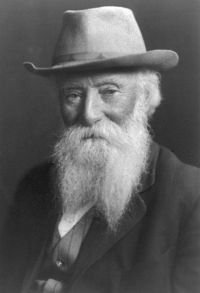
John Burroughs

John Burroughs

Summary

Portrait of John Burroughs John Burroughs A Year in the Fields

In winter, especially, they sweep by me and around me in flocks,—the Canada sparrow, the snow bunting, the shore lark, the pine grosbeak, the redpoll, the cedar-bird,—feeding upon frozen apples in the orchard, upon cedar-berries, upon maple-buds, and the berries of the mountain-ash, and the celtis, and upon the seeds of the weeds that rise above the snow in the field, or upon the hayseed dropped where the cattle have been foddered in the barnyard or about the distant stack; but yet taking no heed of man, in no way changing their habits so as to take advantage of his presence in nature.
Source: Gutenberg

Portrait of John Burroughs John Burroughs A Year in the Fields

April is my natal month, and I am born again into new delight and new surprises at each return of it. Its name has an indescribable charm to me. Its two syllables are like the calls of the first birds,—like that of the phœbe-bird, or of the meadow-lark. Its very snows are fertilizing, and are called the poor man's manure.
Then its odors! I am thrilled by its fresh and indescribable odors,—the perfume of the bursting sod, of the quickened roots and rootlets, of the mould under the leaves, of the fresh furrows. No other month has odors like it.
Source: Gutenberg

Portrait of John Burroughs John Burroughs A Year in the Fields

March water is usually clean, sweet water; every brook is a trout-brook, a mountain brook; the cold and the snow have supplied the condition of a high latitude; no stagnation, no corruption, comes downstream now as on a summer freshet. Winter comes down, liquid and repentant. Indeed, it is more than water that runs then: it is frost subdued; it is spring triumphant. No obsolete watercourses now. The larger creeks seek out their abandoned beds, return to the haunts of their youth, and linger fondly there.
Source: Gutenberg

Get perspective with Kwize: daily news enlightened by great literature