Summary

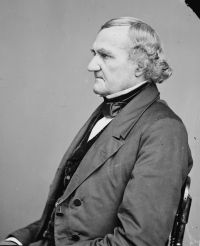
Portrait of John Catron John Catron Doe v. Wilson — Opinion of the Court

The United States held the ultimate title, charged with the right of undisturbed occupancy and perpetual possession, in the Indian nation, with the exclusive power in the Government of acquiring the right. Johnson v. McIntosh, 8 Whea., 603; Comet v. Winton, 2 Yerger's R., 147.
Although the Government alone can purchase lands from an Indian nation, it does not follow, that when the rights of the nation are extinguished, an individual of the nation who takes as private owner cannot sell his interest. The Indian title is property, and alienable, unless the treaty had prohibited its sale.
Source: Wikisource

Portrait of John Catron John Catron Doe v. Wilson — Opinion of the Court

The reservees took by the treaty, directly from the nation, the Indian title; and this was the right to occupy, use, and enjoy the lands, in common with the United States, until partition was made, in the manner prescribed. The treaty itself converted the reserved sections into individual property. The Indians as a nation reserved no interest in the territory ceded; but as a part of the consideration for the cession, certain individuals of the nation had conferred on them portions of the land, to which the United States title was either added or promised to be added
Source: Wikisource

Portrait of John Catron John Catron Doe v. Wilson — Opinion of the Court

It is assumed that the lands embraced by the patents to Pet-chi-co, made in 1837, do not lie within the section of country ceded by the treaty of 27th October, 1832; and therefore the court was asked to instruct the jury that the defendants cannot claim nor hold the land as assignees of Pet-chi-co, by virtue of the treaty. The demand for such instruction was also refused.
There is no evidence in the record showing where the land granted by the patents lies, except that which is furnished by the patents themselves.
Source: Wikisource

Get perspective with Kwize: daily news enlightened by great literature