Summary

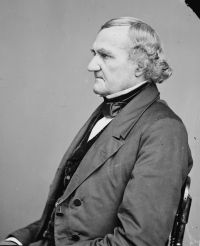
Portrait of John Catron John Catron Gamache v. Piquignot — Opinion of the Court

Although the office and general powers of the recorder are perpetual, yet special and temporary powers given for a particular purpose, will not endure forever.
Granting that the powers conferred by the act of 1824, were not simply conferred on Hunt, the recorder for the time being, but on his office; yet to have authorized Conway, or any successor, to have issued a certificate of confirmation, such successor should have succeeded to the office during the prescribed term of eighteen months, and the proof must have been made before him.
Source: Wikisource

Portrait of John Catron John Catron Gamache v. Piquignot — Opinion of the Court

If the jury believe, from the evidence, that the claim of the village of Carondelet to commons, prior to the 20th day of December, 1803, was bounded north (in part) [by] the cultivated lands of the village, and that, prior to said date, the lot of land in said declaration described as having been claimed by Gamache was one of the cultivated lands of the village, then there is no conflict of title in this case, and the defendants have shown no title to the land in controversy.
Source: Wikisource

Portrait of John Catron John Catron Gamache v. Piquignot — Opinion of the Court

The omission and delay have prejudiced nobody. The lot has not been set apart for schools, as a vacant lot, nor would it have been included in the survey of the commons, by Brown, if the commons belonging to the village had been surveyed according to their claim and confirmation, as directed by the 2d section of the act of 26th May, 1824, nor if he had consulted the records of the recorder's office, and the proof there made of this claim, as he ought to have done.
Source: Wikisource

Get perspective with Kwize: daily news enlightened by great literature