Summary

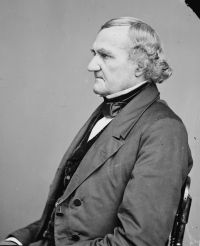
Portrait of John Catron John Catron Les Bois v. Bramell — Opinion of the Court

But when courts of law go behind conflicting patents, and contest the equities on which they are founded, it has never been held that the patent aided the equitable title; it must come in support of the grant, and stand on its own merits. So in this case; the plaintiff admits her grant, of itself, is insufficient to authorize a recovery, and that she must go behind it;-and there she is met by the objection, that her claim had no standing in a court of equity or of law, up to the date of its confirmation, and depended on the political power.
Source: Wikisource

Portrait of John Catron John Catron Les Bois v. Bramell — Opinion of the Court

There the younger patent was founded on the best right in equity, standing in advance of either patent, and the equities were tried at law. But if the elder or better entry had not been carried into a grant, a court of equity might have administered the same measure of justice, and decreed the land from the patentee, whose legal title was founded on the inferior equity.
Source: Wikisource

Portrait of John Catron John Catron Les Bois v. Bramell — Opinion of the Court

Whether the judicial power has any jurisdiction to interfere and enforce such right, supposing it to exist.
That this government had imposed on it the same duty to perfect the title that rested on Spain before the country was ceded is not open to question; but this was all the United States were bound to perform. How, then, did the plaintiff's claim stand previous to the cession. Her first decree and order of survey bear date in May, 1802, and the survey was made in August, 1803; but there is no evidence that any part of the land was either occupied or cultivated.
Source: Wikisource

Get perspective with Kwize: daily news enlightened by great literature