Summary

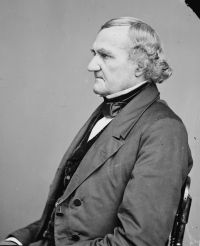
Portrait of John Catron John Catron Jourdan v. Barrett — Opinion of the Court

It follows, the claims of Landry and Jourdan are alike; and the opposing claim of Barrett, being the same as to each of the petitioners, the controversy may be treated as one suit. It depends on mixed questions of law and fact; both having been submitted to the courts below for their judgment, without the aid of a jury; and as the facts giving rise to the controversy call for construction of acts of Congress to give the facts effect, they come before this court for its action under the 25th section of the Judiciary Act.
Source: Wikisource

Portrait of John Catron John Catron Jourdan v. Barrett — Opinion of the Court

In December, 1832, Bringier caused Wilson, a surveyor, to run out his claim of 510 acres, in the same form of the front tract; that is, he began at the back terminus of each side line of the old tract, and ran diverging lines so as to make the opposite side of his new survey of the same width with the front on the river, thus making a tract of 1,020 acres, little more than half as wide in the middle as it is at either end. This survey was neither returned to, nor recorded in, the surveyor-general's office; nor recognized by the officers of the United States as a public survey.
Source: Wikisource

Portrait of John Catron John Catron Jourdan v. Barrett — Opinion of the Court

In April, 1822, when Bringier's entry was made, there can be no fair pretence to say he acquired by the entry an equity to the extent of Wilson's or Rightor's survey, as against others having at that time equal rights to enter back land, which rights the survey assumed to defeat. By his entry Bringier acquired an equity to certain land, to be laid off in a form not to interfere with his neighbours having equal rights under the law. They did not enter, probably because his unjust, pretended claim deterred them
Source: Wikisource

Get perspective with Kwize: daily news enlightened by great literature