Summary

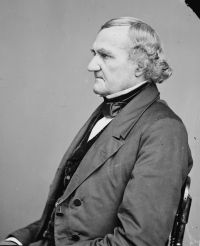
Portrait of John Catron John Catron Surgett v. Lapice — Opinion of the Court

A 'tract of land,' as that expression is used in acts of Congress in relation to public lands, means some legal subdivision, bounded by lines run in the mode prescribed for public surveys. So the word 'lands,' as used in this act of 1832, must mean some legal subdivisions known to the law. If, then, a stream of water should run through such 'tract of land' or 'lands' without constituting a 'border' or limit to the same, it would not be within the act in question. The law of Congress obviously had reference to such bodies of water as controlled the shape of the tract.
Source: Wikisource

Portrait of John Catron John Catron Surgett v. Lapice — Opinion of the Court

The act of 1832 provides, that the claimant shall deliver his notice of claim to the register of the proper land office, stating the extent and situation of the tract he wishes to purchase, and shall make payment; but it has this proviso,-that all notices of claim shall be entered, and the money be paid thereon, at least three weeks before such period as may be designated by the proclamation of the President for the sale of the public lands in the township where such claim may be situated; and all claims not so entered shall be liable to be sold as other public lands.
Source: Wikisource

Portrait of John Catron John Catron Surgett v. Lapice — Opinion of the Court

Similar provisions as respects navigable waters are common to other states where there are public lands, and the practice has been uniform to survey and sell the lands 'bordering' on navigable streams as fractional sections; nor is the channel ever sold to a private owner. Of necessity, it had to be left almost exclusively to the department of lands executing the public surveys to ascertain what stream was navigable, and should be bordered by fractions and reserved from sale
Source: Wikisource

Get perspective with Kwize: daily news enlightened by great literature