Summary

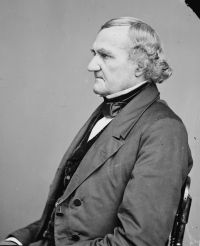
Portrait of John Catron John Catron Hale v. Gaines — Opinion of the Court

The plaintiff in error must claim (for himself) some title, right, privilege, or exemption, under an act of Congress, &c., and the decision must be against his claim, to give this court jurisdiction. Setting up a title in the United States, by way of defence, is not claiming a personal interest affecting the subject in litigation. This is the established construction of the 25th section of the judiciary act.
Source: Wikisource

Portrait of John Catron John Catron Hale v. Gaines — Opinion of the Court

In the Gear case, the law might very reasonably be understood to mean, 'all the lands in this district shall be sold, an far as the general policy of the laws allow such sales, and no further.' In the present case, it would be necessary to interpolate in the law words of exception, thus: 'Every settler on the public lands south of the Arkansas river,' except the old pioneer, John Percifull, shall be entitled, &c.; the remedial policy of curing the defects of title under the act of 1814 shall not have its full effect; it shall cure everybody's title except John Percifull's.
Source: Wikisource

Portrait of John Catron John Catron Hale v. Gaines — Opinion of the Court

Louis, from whose quasi judicial office the title emanated, and approved by him, and the claimant had reconveyed his injured land to the United States, and received a patent certificate from the recorder, no location could take place, so to give him a vested right to the land in question. Down to that period, and until the exchange of land took place, the claimant was not bound, but might abandon his proposed location, or change it for another, or sell his float, or elect to keep his injured land; and so the United States would be free to grant or dispose of its own land in any lawful way.
Source: Wikisource

Get perspective with Kwize: daily news enlightened by great literature