Summary

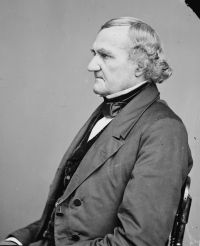
Portrait of John Catron John Catron Lessee of Pollard v. Files — Opinion of the Court

If the act of 1836 be considered as explanatory of that of 1824, it is dangerous to construe a general act by a private one, obtained by a party for his own benefit. The true construction of that of 1824 is that the improvement must be made on the old lot; that every one who went to the water should not be cut off from it. It supposes an inchoate right to the lot in front, because an exception is, if a party has alienated the lot in front.
Source: Wikisource

Portrait of John Catron John Catron Lessee of Pollard v. Files — Opinion of the Court

We think Pollard's was a claim of an individual within the exception, and was so deemed by Congress; as the United States, by the first section, only profess to grant their right to the city front: and except all lots confirmed by Congress by that, or any previous act-and also such 'to which an equitable title existed in favor of any individual under this, or any former act.' Then in the second section, the provision examined in the case of Pollard v. Kibbie has direct reference to protection by excepting lots-'to which the Spanish government had made a new grant or order of survey,' &c.
Source: Wikisource

Portrait of John Catron John Catron Lessee of Pollard v. Files — Opinion of the Court

After the country west of the Perdido had been acquired by the treaty of 1803, the Spanish government continued to exercise jurisdiction over the country, including the city of Mobile, for some nine years; the United States not seeing proper to take possession, and Spain refusing to surrender it, on the assumption that the country had not been ceded by that kingdom to France in the treaty of 1800
Source: Wikisource

Get perspective with Kwize: daily news enlightened by great literature