Summary

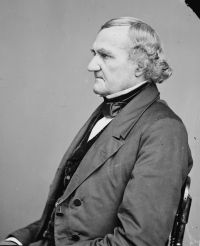
Portrait of John Catron John Catron United States v. Power's Heirs…

The register and receiver were appointed under the act of 1819. Neither the act of 1812, nor any succeeding act, barred a claim to land not surveyed and sold by the United States; and Ship and Deer Islands remaining unsold, the claim before us stands unaffected by the legislation of Congress. That such was the obvious understanding of Congress when the act of 1824 was passed, under which we are exercising jurisdiction, appears by the eleventh section of the act. It protects purchasers under the United States, but not the government itself, as to any lands not surveyed and sold.
Source: Wikisource

Portrait of John Catron John Catron United States v. Power's Heirs…

By the laws of nations, in all cases of conquest, among civilized countries, having established laws of property, the rule is, that laws, usages, and municipal regulations in force at the time of the conquest remain in force until changed by the new sovereign. And this raises the question of fact, whether the king of Spain had changed the laws of England existing in the province, by virtue of which the public domain could be granted to private owners, as early as August 1st, 1781, and in their stead adopted the laws of Spain prevailing in Louisiana
Source: Wikisource

Portrait of John Catron John Catron United States v. Power's Heirs…

Spain having declared war against Great Britain on the 8th of May, 1779, on the 8th of July following a royal schedule was issued, authorizing the Spanish subjects in the Indies to take part in the war.
With the official account of the rupture, Galvez, who had hitherto from July 1, 1777, exercised the functions of governor pro tempore, received the king's commission of governor and intendant. The commission is dated 8th May, 1779, the day of the declaration of war, and is confined to the Province of Louisiana.
Source: Wikisource

Get perspective with Kwize: daily news enlightened by great literature