Summary

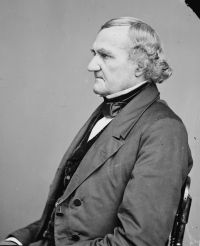
Portrait of John Catron John Catron Mackay v. Dillon — Opinion of the Court

Brazeau, Joseph, had property within the commons, and his fence there, his family and stock. Settlement, I knew of none but the settlement the negro lived in, within the commons, west of the Carondelet road. The other plantations went no further west than the Carondelet road. The Soulard property, which came from my father, went back to the Carondelet road, and no farther. I do not know that horses were continued to be pastured at liberty, except on the commons. I only heard of Mackay's claim till about twenty-four or twenty-five years ago, when he went and built his house.
Source: Wikisource

Portrait of John Catron John Catron Mackay v. Dillon — Opinion of the Court

And the act of 1812 made it the duty of the principal deputy-surveyor of the territory, as soon thereafter as might be, to survey, or cause it to be done, and marked, the out-boundary lines of the several towns, so as to include the out lots, common field lots, and commons; of this out-boundary survey, he was to make plats, and transmit them to the surveyor-general, who was to forward copies to the commissioner of the general land-office and to the United States recorder of land titles in Missouri.
Source: Wikisource

Portrait of John Catron John Catron Mackay v. Dillon — Opinion of the Court

There was no improvement south of Motard's fence; but all was brush and commons. The western part of the United States survey was always used as commons for grazing, to separate the cattle from the common fields, which were open. The inhabitants of the village got their wood on said land used as commons, when there was timber on it. My father did so. The land included in Mackay's survey, which was shown to witness, was used as commons until 1796 until the reign of Zenon Trudeau, when they ceased fencing the same as commons.
Source: Wikisource

Get perspective with Kwize: daily news enlightened by great literature