Summary

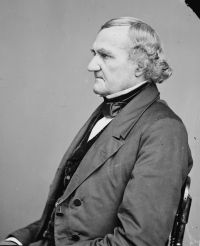
Portrait of John Catron John Catron,  Vigel v. Naylor — Opinion of the Court

“ If Sarah, the mother, Richard, the brother, and Eliza, the sister, were the slaves of Kirby at his death, and acquired their freedom under his will, does this circumstance furnish evidence from which a jury might infer, in connection with other evidence, that the petitioner was also the slave of Kirby when he died, and entitled to her freedom on arriving at thirty years of age? It is immaterial whether the evidence offered and rejected was weak or strong to prove the fact. ”
Source: Wikisource

Portrait of John Catron John Catron,  Vigel v. Naylor — Opinion of the Court

“ Susan Vigel sued Henry Naylor, administrator of George Naylor, by a petition for freedom in the Circuit Court of this District. He pleaded that she was his slave. On the trial of this issue, she offered in evidence the will of John B. Kirby, by which all his slaves over thirty-five years of age were emancipated; and all those under that age were to be emancipated-the males at thirty-five, and the females at thirty years of age. ”
Source: Wikisource

Portrait of John Catron John Catron,  Vigel v. Naylor — Opinion of the Court

“ The record could have proved the existence of the verdict and judgment as a FACT, and the legal consequences flowing from the fact, namely, that the petitioner, Eliza, was a free person. As to George Naylor and his representative, her status of freedom is a conclusive fact. And what is the effect of the record as respects other persons? Eliza sued George Naylor, declaring that she was free. He replied that she was his slave. She had a verdict that she was free. By the verdict and judgment, she took to herself all Naylor's title ”
Source: Wikisource

Get perspective with Kwize: daily news enlightened by great literature