Summary

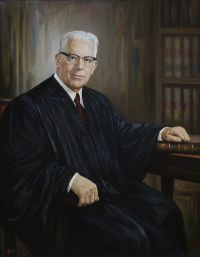
Portrait of Earl Warren Earl Warren Fahy v. Connecticut — Opinion of the Court

It may well be that a confession is never to be considered as nonprejudicial. In any event, the standard applied here required a determination that exclusion of the unconstitutional evidence could not have changed the outcome of the trial. That is a much stricter standard than that of independently sufficient evidence, which leaves open the possibility that the trier of fact did rely on the unconstitutional evidence and, therefore, would have reached a different conclusion if the evidence had been excluded.
Source: Wikisource

Portrait of Earl Warren Earl Warren Fahy v. Connecticut — Opinion of the Court

On the facts of t is case, it is not now necessary for us to decide whether the erroneous admission of evidence obtained by an illegal search and seizure can ever be subject to the normal rules of 'harmless error' under the federal standard of what constitutes harmless error. Compare Ker v. California, 374 U.S. 23, 83 S.Ct. 1623, 10 L.Ed.2d 726. We find that the erroneous admission of this unconstitutionally obtained evidence at this petitioner's trial was prejudicial; therefore, the error was not harmless, and the conviction must be reversed.
Source: Wikisource

Portrait of Earl Warren Earl Warren Fahy v. Connecticut — Opinion of the Court

At about 4:40 a.m., Officer Lindwall of the Norwalk police saw an automobile being operated without lights about a block from the synagogue. Upon stopping the car, Lindwall found that Fahy was driving and Arnold was a passenger. Lindwall questioned Fahy and Arnold about their reason for being out at that hour, and they told him they had been to a diner for coffee and were going home. Lindwall also checked the car and found a can of black paint and a paint brush under the front seat. Having no reason to do otherwise, Lindwall released Fahy and Arnold. He followed the car to Fahy's home.
Source: Wikisource

Get perspective with Kwize: daily news enlightened by great literature