Summary

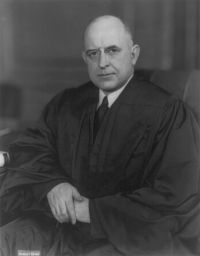
Portrait of Stanley Forman Reed Stanley Forman Reed Opper v. United States — Opinion of the Court

That conclusion derives from petitioner's position that admissions of essential facts to prove a crime or admissions of some of its elements are so analogous to confessions of guilt that the same rule as to corroboration should be applied.
In the United States our concept of justice that finds no man guilty until proven has led our state and federal courts generally to refuse conviction on testimony concerning confessions of the accused not made by him at the trial of his case.
Source: Wikisource

Portrait of Stanley Forman Reed Stanley Forman Reed Opper v. United States — Opinion of the Court

The need for corroboration extends beyond complete and conscious admission of guilt-a strict confession. [7] Facts admitted that are immaterial as to guilt or innocence need no discussion. But statements of the accused out of court that show essential elements of the crime, here payment of money, necessary to supplement an otherwise inadequate basis for a verdict of conviction, stand differently.
Source: Wikisource

Portrait of Stanley Forman Reed Stanley Forman Reed Opper v. United States — Opinion of the Court

In both his oral and written statements petitioner insisted that he had never requested anything of Hollifield in regard to the goggles; that the money was strictly a loan to Hollifield based upon Hollifield's request to him that he needed money in regard to a mortgage on his home; that no security was given for the loan; that he had no receipt or agreement for interest; that he had no personal knowledge as to whether Hollifield owned a home or not; and that none of the money had been repaid. Petitioner consistently and specifically denied any guilt of the offense charged.
Source: Wikisource

Get perspective with Kwize: daily news enlightened by great literature