Summary

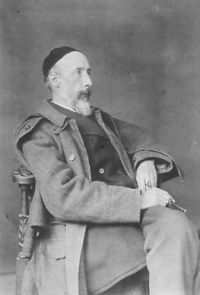
Portrait of John Henry Middleton John Henry Middleton 1911 Encyclopædia Britannica, Volume 27… (1911)

The horse is designed with wonderful nobility and spirit, and the easy pose of the great general, combining perfect balance with absolute ease and security in the saddle, is a marvel of sculpturesque ability. Most remarkable skill is shown by the way in which Verrocchio has exaggerated the strongly marked features of the general, so that nothing of its powerful effect is lost by the lofty position of the head. According to Vasari, Verrocchio was one of the first sculptors who made a practical use of casts from living and dead subjects.
Source: Wikisource

Portrait of John Henry Middleton John Henry Middleton 1911 Encyclopædia Britannica, Volume 27… (1911)

The attitudes are rather rigid and the faces hard in expression. Verrocchio’s chief masterpiece was the colossal bronze equestrian statue of the Venetian general Bartolommeo Colleoni, which stands in the piazza of SS. Giovanni e Paolo at Venice. Verrocchio received the order for this statue in 1479, but had only completed the model when he died in 1488.
Source: Wikisource

Portrait of John Henry Middleton John Henry Middleton 1911 Encyclopædia Britannica, Volume 27… (1911)

Clay sketch for the monument of Cardinal Forteguerra, showing
the kneeling portrait of the cardinal, which is not in the actual
monument; a very poor modern figure occupies its place.⁠
In spite of his request that the casting should be entrusted to his pupil Lorenzo di Credi, the work was given to Alessandro Leopardi by the Venetian senate, and the statue was gilt and unveiled in 1496.
Source: Wikisource

Get perspective with Kwize: daily news enlightened by great literature