Summary

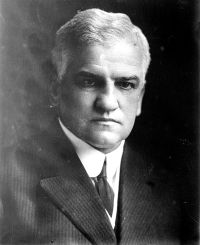
Portrait of John Hessin Clarke John Hessin Clarke American Column Lumber Company v…

To pronounce such abnormal conduct on the part of 365 natural competitors, controlling onethird of the trade of the country in an article of prime necessity, a 'new form of competition,' and not an old form of combination in restraint of trade, as it so plainly is, would be for this court to confess itself blinded by words and forms to realities which men in general very plainly see, and understand and condemn, as an old evil in a new dress and with a new name.
Source: Wikisource

Portrait of John Hessin Clarke John Hessin Clarke American Column Lumber Company v…

A combination to get and distribute such knowledge, notwithstanding its tendency to equalize, not necessarily to raise, prices, is very far from a combination in unreasonable restraint of trade. It is true that it is a combination of sellers only, but the knowledge acquired is not secret, it is public, and the buyers, I think I may assume, are not less active in their efforts to know the facts. A combination in unreasonable restraint of trade imports an attempt to override normal market conditions. An attempt to conform to them seems to me the most reasonable thing in the world.
Source: Wikisource

Portrait of John Hessin Clarke John Hessin Clarke American Column Lumber Company v…

When there are competing sellers of a class of goods, knowledge of the total stock on hand, of the probable total demand, and of the prices paid, of course will tend to equalize the prices asked. But I should have supposed that the Sherman Act did not set itself against knowledge-did not aim at a transitory cheapness unprofitable to the community as a whole because not corresponding to the actual conditions of the country. I should have thought that the ideal of commerce was an intelligent interchange made with full knowledge of the facts as a basis for a forecast of the future on both sides.
Source: Wikisource

Get perspective with Kwize: daily news enlightened by great literature