Summary

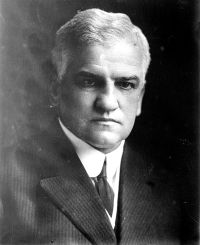
Portrait of John Hessin Clarke John Hessin Clarke Long Sault Development Company v…

And then, addressing itself to the constitutional problem thus stated, the court proceeds, upon principle and authority, to decide: That, under the Constitution of the state of New York, the power of the legislature of that state to grant lands under navigable waters to private persons or corporations is limited to purposes which may be useful, convenient, or necessary to the public; that it has no power to so part with the title to such lands that the state may not in the future improve navigation over them, if the public interest shall so require
Source: Wikisource

Portrait of John Hessin Clarke John Hessin Clarke Long Sault Development Company v…

The act proceeds, first, to incorporate the Long Sault Development Company, giving it perpetual corporate existence, and then in terms to authorize it to construct, maintain, and operate dams, canals, reservoirs, and the appurtenances necessary or useful for the purpose of developing water power and electrical energy, at such point or points adjacent to the south shore of the St. Lawrence river, and in and upon the river bed near Long Sault island or Barnhart's island, as may be selected by the company; to erect and maintain power houses and electrical transmission appliances
Source: Wikisource

Portrait of John Hessin Clarke John Hessin Clarke Long Sault Development Company v…

The grants of the Act of 1907 are such that, if it was a valied law, upon their being accepted, they constituted property or contract rights, of which the plaintiff could not be deprived, and which could not be impaired, by subsequent legislation, and, therefore, the denial by the defendant in error of the jurisdiction of this court renders it necessary for us to determine whether the court of appeals, in its decision, gave any effect to the repealing act.
Source: Wikisource

Get perspective with Kwize: daily news enlightened by great literature