Summary

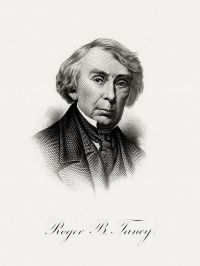
Portrait of Roger B. Taney Roger B. Taney Andrews v. Pond — Opinion of the Court

And in order to enable the jury to decide whether usury was concealed under the name of exchange; evidence on both sides ought to have been admitted, which tended to show the usual rate of exchange between New York and Mobile, when this bill was negotiated. There is no rule of law fixing the rate which may be lawfully charged for exchange. It does not altogether depend upon the cost of transporting specie from one place to another; although the price of exchange is, no doubt, influenced by it.
Source: Wikisource

Portrait of Roger B. Taney Roger B. Taney Andrews v. Pond — Opinion of the Court

The general principle in relation to contracts made in one place to be executed in another, is well settled. They are to be governed by the law of the place of performance-and if the interest allowed by the laws of the place of performance, is higher than that permitted at the place of the contract, the parties may stipulate for the higher interest, without incurring the penalties of usury. And in the case before us, if the defendants had given their note to H. M. Andrews and Co., for the debt then due to them, payable at Mobile, in sixty days, with eight per cent.
Source: Wikisource

Portrait of Roger B. Taney Roger B. Taney Andrews v. Pond — Opinion of the Court

The ten per cent. in controversy is charged as the difference in exchange only, and not for interest and exchange. And if it were otherwise, the interest allowed in New York is seven per cent., and in Alabama eight; and this small difference of one per cent. per annum, upon a forbearance of sixty days, could not materially affect the rate of exchange, and could hardly have any influence on the inquiry to be made by the jury. But there are other considerations which make it necessary to decide this question. The laws of New York make void the instrument when tainted with usury
Source: Wikisource

Get perspective with Kwize: daily news enlightened by great literature