Summary

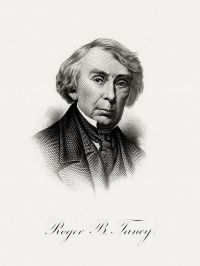
Portrait of Roger B. Taney Roger B. Taney Lessee of Smith v. McCann — Opinion of the Court

In discussing the question thus presented by the decision of the court below, it is proper to state, that in Maryland the distinction between common law and equity, as known to the English law, has been constantly preserved in its system of jurisprudence; and the action of ejectment is the only mode of trying a title to lands. And in that action the lessor of the plaintiff must show a legal title in himself to the land he claims, and the right of possession under it, at the time of the demise laid in the declaration, and at the time of the trial.
Source: Wikisource

Portrait of Roger B. Taney Roger B. Taney Lessee of Smith v. McCann — Opinion of the Court

And in States where there is no court of equity, the courts of common law necessarily deal with equitable interests as if they were legal, and exercise powers over them which are unknown to courts of common law, where a separate chancery jurisdiction is established. Cases, therefore, decided in States which have no courts of equity, as contradistinguished from courts of common law, can have no application to this case so far as trusts or any other equitable interest is involved.
Source: Wikisource

Portrait of Roger B. Taney Roger B. Taney Lessee of Smith v. McCann — Opinion of the Court

But it obviously is not a case to which the doctrine of resulting trusts can be applied; for, as between Fenby and the cestuys que trust, he can have no equity against the express trusts to which he assented, and which, indeed, according to the plaintiff's allegation, he procured to be made. And when the deed is offered in evidence by the plaintiff, in order to derive to himself a legal title under it, the interests and estates thereby conveyed cannot be enlarged or diminished by testimony dehors the deed. The deed must speak for itself.
Source: Wikisource

Get perspective with Kwize: daily news enlightened by great literature