Summary

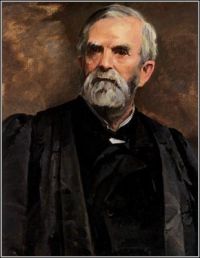
Portrait of William Burnham Woods William Burnham Woods Barton v. Barbour — Opinion of the Court

Thus, upon a bill filed for an injunction to restrain the infringement of letters-patent, and for an account of profits for past infringement, it is now the constant practice of courts of equity to try without a jury issues of fact relating to the title of the patentee, involving questions of the novelty, utility, prior public use, abandonment, and assignment of the invention patented. The jurisdiction of a court of equity to try such issues according to its own course of practice is too well settled to be shaken.
Source: Wikisource

Portrait of William Burnham Woods William Burnham Woods Barton v. Barbour — Opinion of the Court

If he has the right, in a distinct suit, to prosecute his demand to judgment without leave of the court appointing the receiver, he would have the right to enforce satisfaction of it. By virtue of his judgment he could, unless restrained by injunction, seize upon the property of the trust or attach its credits. If his judgment were recovered outside the territorial jurisdiction of the court by which the receiver was appointed, he could do this, and the court which appointed the receiver and was administering the trust assets would be impotent to restrain him.
Source: Wikisource

Portrait of William Burnham Woods William Burnham Woods Barton v. Barbour — Opinion of the Court

If the receiver is to be suable as a private proprietor of the railroad would be, or as the company itself whilst carrying on the business of the railroad was, it would become impossible for the court to discharge its duty to preserve the property and distribute its proceeds among those entitled to it according to their equities and priorities.
Source: Wikisource

Get perspective with Kwize: daily news enlightened by great literature