Summary

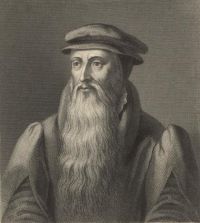
Portrait of John Knox John Knox The History of the Reformation of Religion in Scotland

We beseech Thee, therefore, O Father of mercies, that, as of Thy undeserved grace Thou hast partly removed our darkness, suppressed idolatry, and taken from above our heads the devouring sword of merciless strangers, it would so please Thee to proceed with us in this Thy grace begun. Albeit that in us there is nothing that may move Thy Majesty to show us Thy favour, O yet for the sake of Christ Jesus, Thy only well-beloved Son, whose name we bear, and whose doctrine we profess, we beseech Thee never to suffer us to forsake or deny this Thy truth which now we profess....
Source: Gutenberg

Portrait of John Knox John Knox The History of the Reformation of Religion in Scotland

Arrived in Leith, and hearing no word of those that had appointed to meet him, to wit, the Earl of Cassillis and the gentlemen of Kyle and Cunningham, Master George kept himself secret for a day or two. But beginning to wax sorrowful in spirit, and being asked the cause, he said, "What differ I from a dead man, except that I eat and drink? Unto this time, God has used my labours for the instruction of others, and for the disclosing of darkness; and now I lurk as a man that is ashamed, and dare not show himself before men."
Source: Gutenberg

Portrait of John Knox John Knox The History of the Reformation of Religion in Scotland

As there were some that uprightly favoured the cause of God, so were there many that, for worldly respects, abhorred a perfect Reformation—for how many within Scotland that have the name of Nobility are not unjust possessors of the patrimony of the Kirk? Yet, the barons and ministers were called, and commandment was given unto them to frame in plain and distinct heads the sum of that doctrine which they would maintain, and would desire that Parliament to establish, as wholesome, true, and alone necessary to be believed and to be received within that realm.
Source: Gutenberg

Get perspective with Kwize: daily news enlightened by great literature