
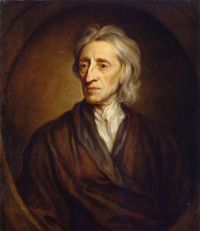
 John Locke,
Two Treatises of Government
(1764, originally 1689)
John Locke,
Two Treatises of Government
(1764, originally 1689)
“ And thus, in the state of nature, one man comes by a power over another; but yet no absolute or arbitrary power, to use a criminal, when he has got him in his hands, according to the passionate heats, or boundless extravagancy of his own will; but only to retribute to him, so far as calm reason and conscience dictate, what is proportionate to his transgression, which is so much as may serve for reparation and restraint: for these two are the only reasons, why one man may lawfully do harm to another, which is that we call punishment. ”
