Summary

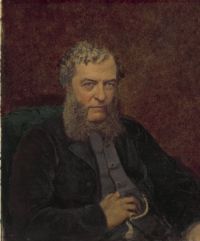
Portrait of John Lort Stokes John Lort Stokes Discoveries in Australia, Volume 2… (1846)

The depth continued regular, at two and a half fathoms, and the width two hundred yards. We hastened onwards; the night scenery being almost more beautiful than the day. The heavens seemed more deep, the water more glittering, the trees more graceful and feathery; and here and there a tall palm reared its thin and spectral form above the dense foliage through which the moonlight broke at intervals, and fell, as it were, in showers of silver on the placid waters.
Source: Wikisource

Portrait of John Lort Stokes John Lort Stokes Discoveries in Australia, Volume 2… (1846)

August 1.—As time and tide wait for no man we were obliged to move off at one in the morning. The earth's shadow having passed over the moon, the pale light of her full orb fell in a silvery stream on the tortuous reaches, as the waters swelled in silence between the growth of mangroves fringing the banks.
At the end of three miles in a W. by S. direction, nearly double by the windings, we passed an island on the left. The depth at low-water, so far, being nearly 2 fathoms, and the width about 250 yards, promised well. Water-tasting had now become rather out of fashion.
Source: Wikisource

Portrait of John Lort Stokes John Lort Stokes Discoveries in Australia, Volume 2… (1846)

A little further on, the moon peering through the matted foliage showed one branch of the river turning off to the southward, whilst another, in the mouth of which we found ourselves, trended west. The lead giving the great depth of six fathoms, we were induced to follow the latter. Utter darkness soon surrounded us; the trees, on either side, over-shadowing the river, which in this branch was not eighty yards wide.
Source: Wikisource

Get perspective with Kwize: daily news enlightened by great literature