Summary

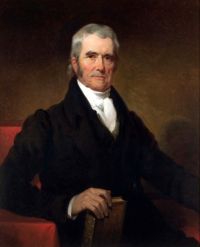
Portrait of John Marshall John Marshall Bailiff v. Lloyd — Opinion of the Court

While cases may be found, and some have been cited, in which an annuity produced a greater interest than was legal, and which, although there was no opportunity of redemption, have not been considered usurious; yet the courts of England have, since those cases, examined the matters of the contract with more scrutiny, and have on the contract, as set forth in the deed creating the annuity, adjudged it usurious; and considered it as a shift to escape from the statute. It is only the good faith of the transaction which will protect it.
Source: Wikisource

Portrait of John Marshall John Marshall Bailiff v. Lloyd — Opinion of the Court

I admit that if a real loan is endeavoured to be covered under any disguise whatever, it is still usury.' He contended that here was no loan, 'but a purchase of property, for bonds are property.' In giving his opinion, Mr Pendleton, the president of the court of appeals, said, 'an agreement by which a man secures to himself, directly or indirectly, a higher premium than six per cent for the loan of money, or the forbearance of a debt, is usury. If the principal or any considerable part be put in risk, it is not usury
Source: Wikisource

Portrait of John Marshall John Marshall Bailiff v. Lloyd — Opinion of the Court

The statute against usurry not only forbids the direct taking of more than six per centum per annum for the loan or forbearance of any sum of money but it forbids any shift or device, by which this prohibition may be evaded and a greater interest be in fact secured. If a larger sum than six per cent be not expressly reserved, the instrument will not of itself expose the usury; but the real corruptness of the contract must be shown by extrinsic circumstances, which prove its character.
Source: Wikisource

Get perspective with Kwize: daily news enlightened by great literature