Summary

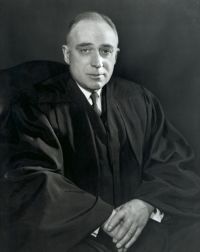
Portrait of John Marshall Harlan II John Marshall Harlan II Alderman v. United States (394 U.S. 165…

His privacy is not at all disturbed by the fact that other people in other places cannot speak without the fear of being overheard. That fact may be profoundly disturbing to the man whose privacy remains intact. But it remains a fact about other people's privacy. To permit a criminal defendant to complain about such intrusions is to permit the vicarious assertion of Fourth Amendment rights-a step which I decline to take in relation to property owners for much the same reasons as those which have impelled the Court to deny standing to coconspirators.
Source: Wikisource

Portrait of John Marshall Harlan II John Marshall Harlan II Alderman v. United States (394 U.S. 165…

In contrast, a man must necessarily carry his voice around with him, and cannot leave it at home even if he wishes. When a man is not at home, he cannot converse there. There is thus no need to protect a man's 'house' in order to protect his right to engage in private conversation. Consequently, the Court has not increased the scope of an accused's personal privacy by holding that the police have unconstitutionally invaded his 'house' by putting a 'bug' there. Houses do not speak; only people do. The police have violated only the privacy of those persons whose conversations are overheard.
Source: Wikisource

Portrait of John Marshall Harlan II John Marshall Harlan II Alderman v. United States (394 U.S. 165…

Indeed, the Court's emphasis on property ownership could well mean that a husband, as owner of a particular property, is entitled to complain as to a violation of his wife's privacy, but that the wife could not complain as to the unlawful surveillance of her husband since she did not have a sufficiently substantial interest in the property on which the intrusion occurred. In contrast, if a perfect stranger is overheard on one's property, standing is established.
Source: Wikisource

Get perspective with Kwize: daily news enlightened by great literature