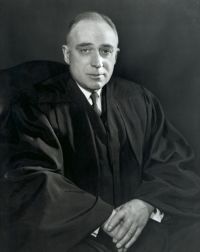
John Marshall Harlan II

John Marshall Harlan II

Summary

Portrait of John Marshall Harlan II John Marshall Harlan II Beck v. Ohio — Dissent

A distinction between facts and inferences may often be difficult to draw, but the guiding principle for this Court should be that when a question is in doubt and demeanor and credibility of witnesses, or contemporaneous understandings of the parties, have a part to play in its resolution, this Court should be extremely slow to upset a state court's inferential findings.
Source: Wikisource

Portrait of John Marshall Harlan II John Marshall Harlan II Beck v. Ohio — Dissent

Petitioner argued in the Ohio Supreme Court, 'the pattern is obvious, an officer testifies he had information from a confidential source that a particular person is 'picking up' numbers in a given area and based on that information they arrest such person 'on sight' without a warrant.' [4] Judge Zimmerman of the Supreme Court of Ohio found it to be the fact without seeing any need for elaboration. Respondent, in its brief in this Court, assumed it to be the fact. [5] And petitioner raised no question as to this inference in either his petition or brief.
Source: Wikisource

Portrait of John Marshall Harlan II John Marshall Harlan II Beck v. Ohio — Dissent

It is true that the officer never specifically said 'The informant told me that Beck was operating in the area of East 115th Street and Beulah,' but he did testify that he went looking for Beck in that specific area, that he was acting in part on information, and that his information had been related to him by some specific person whose name he felt privileged not to divulge. I find the state court inference reasonable, even on the basis of the admittedly sparse record before us, that the informant told the officer that Beck was operating in the mentioned area.
Source: Wikisource

Get perspective with Kwize: daily news enlightened by great literature