Summary

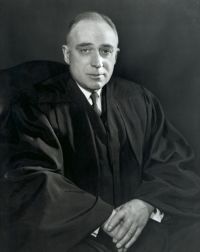
Portrait of John Marshall Harlan II John Marshall Harlan II Brulotte v. Thys Company (379 U.S. 29…

Consider the situation as of the day the patent monopoly ends. Any manufacturer is completely free to produce Thys-type hop-pickers. The farmer who has previously purchased a Thys machine is free to buy and use any other kind of machine whether or not it incorporates the Thys idea, or make one himself if he is able. Of course, he is not entitled as against Thys to the free use of any Thys machine.
Source: Wikisource

Portrait of John Marshall Harlan II John Marshall Harlan II Brulotte v. Thys Company (379 U.S. 29…

The patent laws prohibit post-expiration restrictions on the use of patented ideas; they have no bearing on use restrictions upon nonpatented, tangible machines. We have before us a mixed case involving the sale of a tangible machine which incorporates an intangible, patented idea. My effort in what follows is to separate out these two notions, to show that there is no substantial restriction on the use of the Thys idea, and to demonstrate that what slight restriction there may be is less objectionable than other post-expiration use restrictions which are clearly acceptable.
Source: Wikisource

Portrait of John Marshall Harlan II John Marshall Harlan II Brulotte v. Thys Company (379 U.S. 29…

In fact a distinction should not be accepted based on the assumption that Thys, which exploits its patents by selling its patented machines rather than licensing others to manufacture them, can use its patent leverage to exact more onerous payments from farmers by gearing price to use instead of charging a flat sum. Four possible situations must be considered. The purchasing farmer could overestimate, exactly estimate, underestimate, or have no firm estimate of his use requirements for a Thys machine.
Source: Wikisource

Get perspective with Kwize: daily news enlightened by great literature