Summary

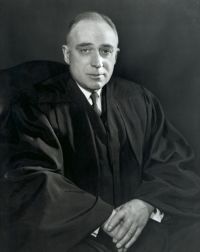
Portrait of John Marshall Harlan II John Marshall Harlan II California v. Lo-Vaca Gathering Company Southern California Gas Company…

For example, if we suppose a pipeline running from the Gulf coast of Texas through New Mexico into California, as does the El Paso system, then each supplier should determine what percentage of the total volume of gas flowing west from the point of its input will be ultimately used for a nonjurisdictional purpose. It would then be mathematically probable that his gas would be used for nonjurisdictional purposes in the same percentage, and he could allocate that amount by contract, subject to change should new supplies be added to the system.
Source: Wikisource

Portrait of John Marshall Harlan II John Marshall Harlan II California v. Lo-Vaca Gathering Company Southern California Gas Company…

The issue now before the Court arises only when some suppliers are allocating part or all of their gas to nonjurisdictional use, but others are not. This issue could arise commonly in two contexts: if existing suppliers were allocating pro rata, and new suppliers were added which did not allocate, the addition of the new suppliers might be thought not to destroy the validity of the existing allocation contracts since the new suppliers might be satisfying an increase in the demand for jurisdictional gas.
Source: Wikisource

Portrait of John Marshall Harlan II John Marshall Harlan II California v. Lo-Vaca Gathering Company Southern California Gas Company…

It reflects the sort of decision that is to be expected when the Court is willing to make a bare choice between two unrefined points of view as to regulatory method, without first being informed by the regulating agency concerned as to its evaluation of the competing factors something that is indispensable to achieving a well-balanced solution of a problem such as this.
Source: Wikisource

Get perspective with Kwize: daily news enlightened by great literature