Summary

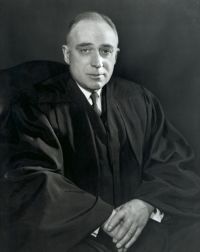
Portrait of John Marshall Harlan II John Marshall Harlan II Cheff v. Schnackenberg — Concurrence

However, so far as the safeguards of criminal contempt proceedings may be superior to civil, the petitioners have not been disadvantaged in this regard, nor do they claim otherwise. Adding a purge clause to a fixed sentence is a benefit for the petitioners, not a reason for complaint. Similarly the public interest is served by exerting strong pressure to obtain answers while tailoring the length of imprisonment so that it may punish the defendant only for his period of recalcitrance and no more.
Source: Wikisource

Portrait of John Marshall Harlan II John Marshall Harlan II Cheff v. Schnackenberg — Concurrence

The decision to extend the right to jury trial to criminal contempts ending in sentences greater than six months is the product of the views of four Justices who rest that conclusion on the Court's supervisory power and those of two others who believe that jury trials are constitutionally required in all but 'petty' criminal contempts. The four Justices who rely on the supervisory power also find the constitutional question a 'difficult' one.
Source: Wikisource

Portrait of John Marshall Harlan II John Marshall Harlan II Cheff v. Schnackenberg — Concurrence

No less remarkable is the Court's upsetting of the sentences in Shillitani and Pappadio on the ground that the jailings were really for civil contempt which cannot endure beyond the grand jury's term. [3] It can hardly be suggested that the lower courts did not intend to invoke the criminal contempt power to keep the petitioners in jail after the grand jury expired
Source: Wikisource

Get perspective with Kwize: daily news enlightened by great literature