Summary

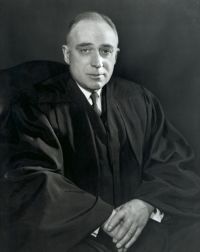
Portrait of John Marshall Harlan II John Marshall Harlan II Giordenello v. United States — Opinion of the Court

The purpose of the complaint, then, is to enable the appropriate magistrate, here a Commissioner, to determine whether the 'probable cause' required to support a warrant exists. The Commissioner must judge for himself the persuasiveness of the facts relied on by a complaining officer to show probable cause. He should not accept without question the complainant's mere conclusion that the person whose arrest is sought has committed a crime.
Source: Wikisource

Portrait of John Marshall Harlan II John Marshall Harlan II Giordenello v. United States — Opinion of the Court

A warrant of arrest can be based upon an indictment because the grand jury's determination that probable cause existed for the indictment also establishes that element for the purpose of issuing a warrant for the apprehension of the person so charged. Here, in the absence of an indictment, the issue of probable cause had to be determined by the Commissioner, and an adequate basis for such a finding had to appear on the face of the complaint.
Source: Wikisource

Portrait of John Marshall Harlan II John Marshall Harlan II Giordenello v. United States — Opinion of the Court

In this Court petitioner argues, as he did below, that Finley's seizure of the heroin was unlawful, since the warrant of arrest was illegal and the seizure could be justified only as incident to a legal arrest, and that consequently the admission of the heroin into evidence was error which requires that his conviction be set aside.
Source: Wikisource

Get perspective with Kwize: daily news enlightened by great literature