Summary

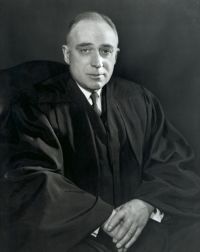
Portrait of John Marshall Harlan II John Marshall Harlan II Maryland ex rel. Levin v. United States…

It has only been in recent years that the National Guard has been an organized force, capable of being assimilated with ease into the regular military establishment of the United States. From the days of the Minutemen of Lexington and Concord until just before World War I, the various militias embodied the concept of a citizen army, but lacked the equipment and training necessary for their use as an integral part of the reserve force of the United States Armed Forces.
Source: Wikisource

Portrait of John Marshall Harlan II John Marshall Harlan II Maryland ex rel. Levin v. United States…

It is not argued here that military members of the Guard are federal employees, even though they are paid with federal funds and must conform to strict federal requirements in order to satisfy training and promotion standards. Their appointment by state authorities and the immediate control exercised over them by the States make it apparent that military members of the Guard are employees of the States, and so the courts of appeals have uniformly held. See n. 5, supra. Civilian caretakers should not be considered as occupying a different status.
Source: Wikisource

Portrait of John Marshall Harlan II John Marshall Harlan II Maryland ex rel. Levin v. United States…

The caretakers have been termed the 'backbone' of the Guard, [21] and are the only personnel on duty with Guard units during the greater part of the year. Like their military counterpart, caretakers are appointed by the State Adjutant General, [22] and are responsible to him in the performance of their daily duties. They can be discharged and promoted only by him. [23] Civilian caretakers are treated as state employees for purposes of the Social Security Act, [24] for state retirement funds, [25] and under the regulations issued by the Department of the Air Force.
Source: Wikisource

Get perspective with Kwize: daily news enlightened by great literature