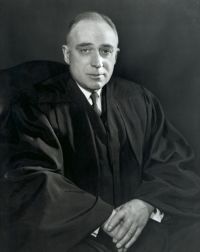
John Marshall Harlan II

John Marshall Harlan II

Summary

Portrait of John Marshall Harlan II John Marshall Harlan II Memoirs v. Massachusetts — Dissent

State obscenity laws present problems of quite a different order. The varying conditions across the country, the range of views on the need and reasons for curbing obscenity, and the traditions of local self-government in matters of public welfare all favor a far more flexible attitude in defining the bounds for the States. From my standpoint, the Fourteenth Amendment requires of a State only that it apply criteria rationally related to the accepted notion of obscenity and that it reach results not wholly out of step with current American standards.
Source: Wikisource

Portrait of John Marshall Harlan II John Marshall Harlan II Memoirs v. Massachusetts — Dissent

My premise is that in the area of obscenity the Constitution does not bind the States and the Federal Government in precisely the same fashion. This approach is plainly consistent with the language of the First and Fourteenth Amendments and, in my opinion, more responsive to the proper functioning of a federal system of government in this area. See my opinion in Roth, 354 U.S., at 505-506, 77 S.Ct., at 1319-1320.
Source: Wikisource

Portrait of John Marshall Harlan II John Marshall Harlan II Memoirs v. Massachusetts — Dissent

To establish social value in the present case, a number of acknowledged experts in the field of literature testified that Fanny Hill held a respectable place in serious writing, and unless such largely uncontradicted testimony is accepted as decisive it is very hard to see that the 'utterly without redeeming social value' test has any meaning at all.
Source: Wikisource

Get perspective with Kwize: daily news enlightened by great literature